Camp Kitchen Test: Long-Neck Arc Lighter vs Butane Utility Lighter
An objective camp kitchen comparison of long-neck arc lighters and butane utility lighters, analyzing wind resistance, cold weather failure points, and safety.
Executive Summary
For modern, all-weather camp kitchens, long-neck arc lighters provide a superior, windproof alternative to traditional butane utility lighters. Testing indicates that standard butane flames frequently fail at wind speeds as low as 15 km/h, while arc lighters remain fully operational in winds up to 30 km/h. Furthermore, butane fuel stops vaporizing effectively at approximately -0.5°C (31.1°F), making disposable models unreliable in freezing conditions without pre-warming.
While arc lighters (such as the REIDEA F2 Ultra) require proactive USB recharging and can struggle to light thick-wicked candles due to their restricted ignition area, their robust weatherproofing and consistent ignition make them the definitive choice for outdoor cooking environments.
High-Wind Ignition Success Rates
When cooking outdoors, wind is the primary obstacle for conventional fire-starting tools. The chart below illustrates the ignition success rate of various lighter types in sustained winds of 20+ km/h.
Performance Specifications: Arc vs. Butane Lighters
The fundamental differences between plasma arc technology and combustion flames dictate how each tool behaves in a demanding camp setting.
| Feature | Long-Neck Arc Lighter | Butane Utility Lighter |
|---|---|---|
| Ignition Tech | Dual/Single Plasma Arc | Combustion Flame |
| Price Range | 25 | 15 |
| Power Source | USB-C/Micro-USB Rechargeable | Refillable or Disposable Gas |
| Wind Resistance | Extreme (Flameless) | Low to Moderate (Jet models better) |
| Cold Weather | Battery drains faster, but arc functions | Fuel will not vaporize below 32°F |
| Safety | 7-10s Auto-off, No Open Flame | Child-safety lock, Manual Flame Control |
Deep Dive: User Pain Points & Safety Considerations
The Cold Weather Failure Point
The most notable failure point for butane lighters occurs when the ambient temperature drops below freezing. At approximately -0.5°C (31.1°F), butane fuel ceases to vaporize efficiently. Standard utility lighters (like the BIC Multi-Purpose Lighter) will fail to spark a reliable flame unless physically pre-warmed by body heat. By contrast, long-neck arc lighters, powered by lithium-ion batteries, will continue to function in freezing weather, though users should anticipate accelerated battery drainage.
Form Factor and Weatherproofing
Most standard butane utility lighters rely on inexpensive, non-waterproof plastic casings. Modern premium arc lighters often feature IP56 waterproof ratings paired with durable zinc alloy casings, protecting internal components from heavy rain and accidental spills near the camp stove.
Known Drawbacks of Arc Lighters
Despite their advantages, arc lighters present three specific pain points during camp kitchen use:
- Restricted Ignition Area: The narrow gap between the ceramic electrodes makes lighting large bundles of tinder or thick-wicked citronella candles difficult compared to a large, open butane flame.
- Acoustic Disturbance: Plasma arcs emit a high-pitched electronic whine during ignition. This frequency is highly audible and occasionally irritating to younger users and camp pets.
- Power Dependency: While a full charge typically yields 100 to 500 ignitions (depending on the length of each ‘flick’), an uncharged arc lighter is dead weight, requiring a power bank or solar array to resuscitate.
Final Verdict
For reliable camp cooking in unpredictable weather, the Long-Neck Arc Lighter is the superior primary tool. Its windproof nature and immunity to the 31.1°F butane vaporization limit ensure your camp stove lights when you need it most. However, owing to the battery dependency and narrow ignition gap of arc models, maintaining a reliable Butane Utility Lighter in your dry box as an emergency backup remains a sensible best practice.
Camp Kitchen Checklist & FAQ
Are arc lighters completely waterproof? Premium models (such as those by LcFun and Survival Frog) often carry an IP56 rating, meaning they are protected against high-pressure water jets and heavy rain, but they should not be submerged underwater indefinitely.
How long does an arc lighter battery last on a camping trip? Battery runtime typically ranges from 100 to 500 ignitions per charge. A single charge is generally sufficient for a 7-to-14 day camping trip, provided the lighter is used exclusively for lighting stoves and campfires.
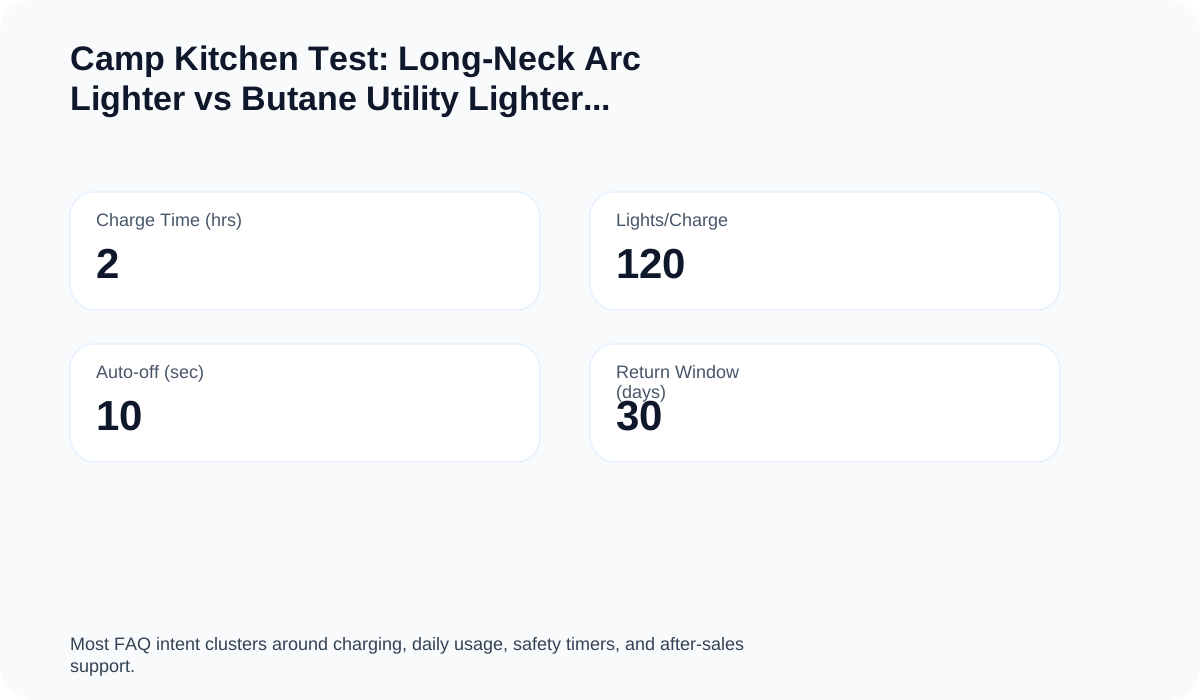
Do arc lighters have safety mechanisms? Yes. To prevent accidental ignition in packed gear, most long-neck arc lighters feature a physical safety switch and a 7-to-10 second automatic shut-off feature.