Best Long Cables for Solar Panel Camp Setups: 10AWG vs 12AWG Guide
Maximize your solar panel camp setup with the best long extension cables. Discover why 10AWG pure copper cables prevent voltage drop and beat CCA alternatives.
Executive Summary
For effective solar camp setups, long extension cables must balance reach with charging efficiency. The industry consensus for 2026 shows that 10AWG (American Wire Gauge) pure copper cables are the optimal choice for runs between 30 and 50 feet. Thinner 12AWG or 14AWG cables result in significant voltage drop, wasting valuable solar energy. When setting up your portable power station, prioritize UV-resistant (XLPE or TPU) jackets and true pure copper over Copper Clad Aluminum (CCA) to ensure optimal charging speeds and safety.
The Performance Killer: Voltage Drop
The number one user complaint in portable solar setups is panels underperforming—often delivering only 140W from a 200W panel to the power station. This is frequently caused by excessive voltage drop over long runs of cheap, thin cable (such as 50 feet of 12AWG).
Industry standards dictate keeping DC power loss under 3%. For a typical camping setup requiring 30 to 50 feet of cable to reach the sun while keeping the power station in the shade, 10AWG is the “sweet spot.”
Top Solar Extension Cables Compared
The following cables represent the leading options for off-grid and camping setups, evaluated by gauge, price, and durability.
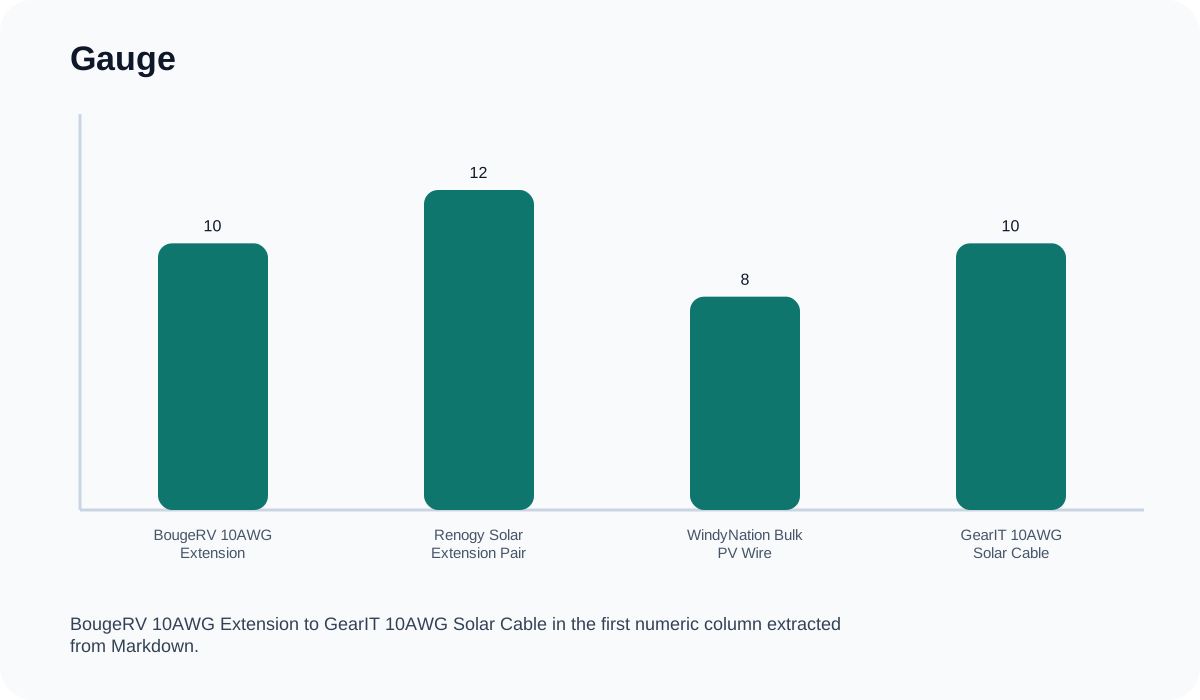
| Brand & Product | Gauge | Price Range | Waterproof Rating | Charging Efficiency |
|---|---|---|---|---|
| BougeRV 10AWG Extension | 10 AWG | 45 | IP67 | High (Pure Copper) |
| Renogy Solar Extension Pair | 12 AWG | 55 | IP67 (TPU Jacket) | Medium (Thinner Wire) |
| WindyNation Bulk PV Wire | 8 - 10 AWG | 80 | UL 4703 Rated | Ultra-High (Custom) |
| GearIT 10AWG Solar Cable | 10 AWG | 35 | IP67 | High (Budget Value) |
Beware the Copper Clad Aluminum (CCA) Trap
Many budget Amazon brands advertise “pure copper” cables that are actually Copper Clad Aluminum (CCA). CCA wire has significantly higher resistance than pure copper. In high-output portable power systems, CCA can lead to thermal failure, overheating, and drastic charging delays. Always verify that you are purchasing 100% pure bare copper or tinned copper for solar extensions.
Connector Compatibility: MC4 to XT60
While MC4 connectors remain the industry standard for panel-to-cable connections, input requirements on the power station side are shifting. Modern portable power stations (like newer EcoFlow and Jackery units) increasingly utilize XT60 or Anderson Powerpole inputs due to their superior high-current handling.
User Pain Point: Safety and efficiency are often compromised by mixing connector brands. Slight manufacturing tolerance differences between different MC4 clones can cause high-resistance hot spots, arcing, or simply fail to “click” securely, requiring manual filing or replacement in the field.
Durability: Weatherproofing Beyond the Connector
Waterproofing claims usually focus on the MC4 connectors, which typically carry an IP67 or IP68 rating. However, true longevity requires attention to the cable jacket. Inexpensive PVC-jacketed cables become brittle and crack after just one summer of intense UV and desert heat exposure. Look for XLPE or TPU insulation, which provides flexibility and UV resistance across multiple seasons.
Safety and Setup Checklist
Before deploying your long solar extensions, check off these critical steps:
- Amperage Headroom: Ensure the cable’s amperage rating exceeds the panels’ Short Circuit Current (Isc) by at least 25% to account for peak sun conditions.
- Overcurrent Protection: Always use an inline fuse or DC circuit breaker between parallel-wired solar panels and the charge controller.
- Cable Routing: Route cables carefully to avoid camp trip hazards and prevent them from resting in standing puddles, regardless of their IP67 rating.
- Storage Considerations: Be prepared for stiffness; heavy-duty 10AWG pure copper cables can be rigid and require larger coiling loops for backpack or camper van storage.
Final Verdict
For maximizing solar yield at camp, invest in 10AWG pure copper extension cables like those from BougeRV or GearIT. The slightly higher upfront cost and added storage stiffness are far outweighed by the drastic reduction in voltage drop, allowing your power station to charge up to its full potential even when tucked safely 50 feet away in the shade.