Best Flashlight Arc Lighter Combos for Emergency Kits
Discover the top flashlight arc lighter combos for emergency kits. We analyze waterproof ratings, battery runtime, and key user pain points for peak readiness.
Executive Summary
Flashlight-arc lighter combos have evolved into essential, multi-purpose tools for modern emergency kits. By combining windproof plasma ignition with rechargeable LED illumination, these tools eliminate the need for volatile, degradable fuels like butane.
For most emergency kits, the Survival Frog Tough Tesla 2.0 and the Dark Energy Plasma Lighter offer the most reliable performance, combining IP56 to IP67 waterproof ratings with standard USB-C charging. However, buyers must be aware of inherent technological limitations: narrow electrode gaps limit tinder compatibility, and “parasitic drain” requires long-term storage maintenance.
Top Models Compared
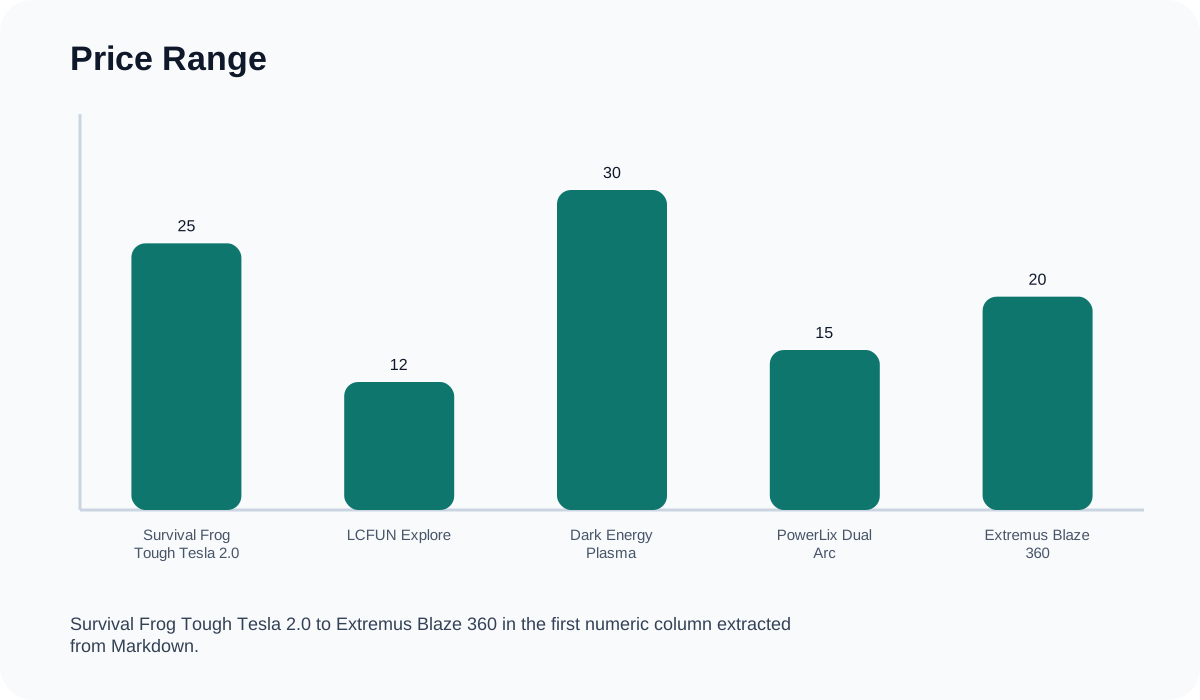
The following table outlines the leading flashlight-arc lighter combos based on current market availability, price ranges, and technical specifications.
| Product | Price Range | IP Rating | Battery Capacity | Key Pro |
|---|---|---|---|---|
| Survival Frog Tough Tesla 2.0 | $25-30 | IP56 | 220mAh | Included tinder lanyard |
| LCFUN Explore | $12-18 | IP56 | 220mAh | Best value / budget choice |
| Dark Energy Plasma | $30-40 | IP67 | 300mAh | Superior waterproofing |
| PowerLix Dual Arc | $15-22 | IP56 | 250mAh | Ergonomic grip |
| Extremus Blaze 360 | $20-25 | IP56 | 220mAh | Flexible neck option |
Performance Analytics: Battery vs. Ignitions
Battery capacity (measured in mAh) directly dictates how many ignitions a device can perform before requiring a recharge. A standard ignition is typically measured as a 3-to-5-second burst.
Technical Analysis: What to Look For
1. Weatherproof Engineering (IP56 to IP67)
Emergency lighters must withstand extreme elements. The current standard for high-end arc lighters is an IP56 to IP67 waterproof rating. This is achieved through a physical locking latch and a gasket-sealed cap. This seal prevents water from bridging the electrodes or corroding the charging port during submersion.
2. Battery Life and Illumination Runtime
Combos rely on internal lithium-ion batteries ranging from 220mAh to 360mAh.
- Flashlight Runtime: Running the LED flashlight will yield roughly 1.5 to 3 hours of continuous use (estimated output is typically around 100 lumens, though exact brightness varies by model).
- Charging Standard: USB-C is the current industry standard, offering full recharge times of 1.5 to 2 hours. Avoid budget models still utilizing micro-USB, as they complicate emergency cable management.
3. Safety and Ignition Mechanics
To produce plasma arcs, these devices utilize high-voltage booster circuits that step up the battery voltage to approximately ~7KV (7,000 volts). Due to the high heat and voltage, essential safety features include:
- Physical Locking Latch: Prevents accidental deployment in a crowded emergency bag.
- 10-Second Auto-Off Timer: A firmware-level cutoff that prevents the circuit from overheating if the button is held down continuously.
Real User Pain Points
While highly effective, arc lighters are not without limitations. Research identifies three primary friction points for users:
- Parasitic Drain: Because of internal circuitry monitoring the power button, the battery will slowly self-discharge over time. Users report that storing an arc lighter in a bag for over a year can lead to a completely dead battery.
- Narrow Electrode Gap: The physical space between the ignition nodes is small. It is highly effective for lighting paper, dry grass, or specially designed tinder (like the Tough Tesla’s included tinder lanyard), but it struggles to ignite thick twigs or standard fire-starting logs without processing the material first.
- Hinge Durability: The spring-loaded hinge mechanism is a common point of mechanical failure if dropped repeatedly on hard surfaces.
Final Verdict
For dedicated preppers and survivalists, the Dark Energy Plasma Lighter offers the highest degree of reliability, pairing a larger 300mAh battery with top-tier IP67 waterproofing.
For those outfitting multiple emergency bags on a budget, the LCFUN Explore is a highly capable runner-up. While it maxes out at 200 ignitions per charge, its IP56 rating and USB-C compatibility make it the most cost-effective dual-purpose tool on the market.
Emergency Kit Prep Checklist
To ensure your flashlight-arc lighter combo is ready when disaster strikes, follow this maintenance protocol:
- Quarterly Charging: Re-charge the device every 3 to 6 months to counteract parasitic battery drain.
- Tinder Prep: Store fine, stringy tinder (e.g., frayed jute twine or cotton balls) alongside the lighter to account for the narrow electrode gap.
- Port Inspection: Ensure the gasket seal is free of lint and debris before locking the cap for long-term storage.
- Cable Standardization: Pack a dedicated USB-C cable and a compatible power bank in your kit.