Best Chest Rigs and Pouches for Organizing Survival Electronics
A technical guide to survival electronics chest rigs, evaluating cable management, thermal safety, and load-bearing setups for GPS and comms devices.
Executive Summary
The landscape of load-bearing survival gear has shifted drastically, moving away from pure ammunition capacity toward modular “micro-rigs” and dedicated chest packs optimized for electronics management. The most effective chest rigs prioritize rapid accessibility and internal cable routing to support devices like VHF/UHF radios, satellite messengers, and power banks. Leading solutions from brands like Hill People Gear and Haley Strategic rely on durable 500D to 1000D Cordura, balancing abrasion resistance with internal organization. However, users must actively manage two critical challenges: thermal stress (which affects both human endurance and lithium battery health) and the need for secondary waterproofing, as stitched Cordura is not inherently fully submersible.
Top Chest Rigs for Survival Electronics (2025-2026)
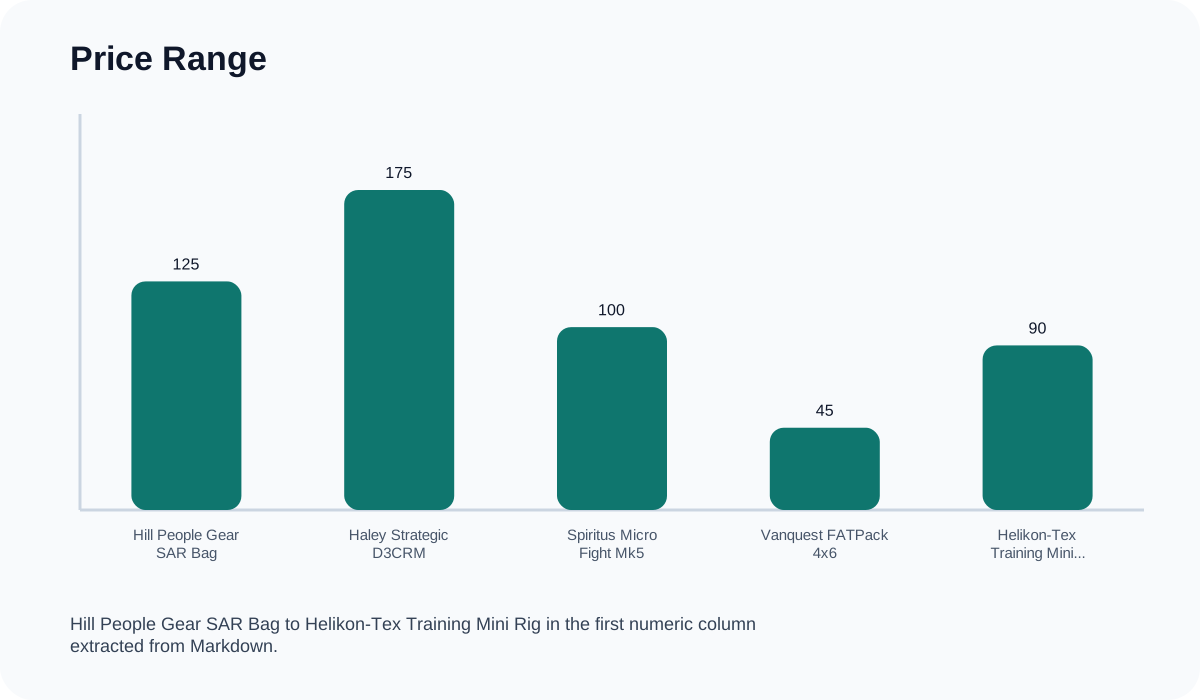
The following table outlines the leading chest rigs and pouches evaluated for survival technology integration, based on price, technical features, and organizational capability.
| Product | Price Range | Key Tech Feature | Organization Level |
|---|---|---|---|
| Hill People Gear SAR Bag | 160 | Integrated cable ports & radio holster | High (Full Clamshell) |
| Haley Strategic D3CRM | 190 | Elastic loops for cable routing | Medium (Modular Inserts) |
| Spiritus Micro Fight Mk5 | 150 | Laser-cut MOLLE for external tech | Low (Modular/Add-on) |
| Vanquest FATPack 4x6 | 60 | High-visibility interior + elastic | Very High (Dedicated Organizer) |
| Helikon-Tex Training Mini Rig | 110 | Built-in admin pouch for GPS | Medium (Fixed) |
Understanding User Pain Points
When carrying survival electronics on the chest, operational friction often stems from environmental and ergonomic factors rather than pure durability.
Core Analysis: Designing the Optimal Tech Rig
1. Cable Routing and Power Pass-Through
The most pressing functional challenge in modern survival chest rigs is managing “spaghetti” wiring. Operating external antennas, satellite trackers, and solar charging leads creates dangerous snagging hazards if unmanaged.
Modern charging methodologies emphasize a “pass-through” setup. This typically involves seating a 10,000mAh to 20,000mAh power bank centrally within the rig. Using MOLLE-routed USB-C cables, power is distributed to shoulder-mounted units. Features like the integrated cable ports on the Hill People Gear SAR Kit Bag or the elastic cable loops on the Haley Strategic D3CRM Micro are critical for keeping these connections secure during movement.
2. Device Runtimes and Solar Integration
Understanding your hardware’s baseline capability dictates your loadout size. Typical battery runtimes for chest-mounted survival gear include:
- Garmin InReach Mini 2: 90+ hours (in standard tracking mode)
- Baofeng UV-5R (VHF/UHF Radio): 12-18 hours of standard operational use
To supplement these, users often integrate external solar chargers, such as the Goal Zero Nomad 5 Solar Panel. (Note: Field testing the charging efficiency of a 5W panel mounted directly to a top flap during movement is recommended, as continuous direct sunlight is rarely guaranteed.)
3. Waterproofing vs. Water Resistance
Most tactical rigs utilize 500D or 1000D Cordura. While this material is highly abrasion-proof and offers robust water resistance, it lacks the seam-taping required for true waterproofing. For sensitive electronics, this means secondary containment is non-negotiable. Users must employ dry-pouch inserts or ensure all internal electronics carry rigorous, independent IPX water-resistance ratings.
4. Safety Considerations: Thermal Stress and Core Strain
As highlighted in the chart above, thermal stress accounts for 35% of user complaints. Wearing dense gear directly over the chest restricts the body’s natural cooling mechanisms.
This presents a dual hazard:
- User Endurance: Core temperature increases can severely impact physical performance in high-heat environments.
- Battery Degradation: Sustained exposure to direct body heat can accelerate lithium-ion battery degradation, potentially reducing the operational lifespan of power banks and radios.
Furthermore, “over-rigging”—packing too many electronics and backup batteries into frontward pouches—can lead to core muscle strain. Utilizing an H-harness system is highly recommended to distribute weight evenly across the shoulders and back.
Final Verdict
For users heavily invested in backcountry communications and navigation, the Hill People Gear SAR Kit Bag is the premier choice due to its dedicated cable ports and full-clamshell organization. For those looking to add modular tech capacity to an existing loadout, the Vanquest FATPack 4x6 provides exceptional, high-visibility organization at a budget-friendly price point.
Rig Setup Checklist
Before deploying your electronics rig in the field, verify the following:
- H-Harness Verification: Ensure weight is distributed evenly to prevent core strain.
- Secondary Waterproofing: Are sensitive devices sealed in IPX-rated dry bags?
- Cable Management: Are all USB-C and antenna cables routed through elastic loops or ports to eliminate snag hazards?
- Thermal Clearance: Is there adequate ventilation, and are lithium batteries positioned away from the most heat-intensive areas of the chest?
- EMI Check: Have you verified that your high-output radio does not cause electromagnetic interference with your adjacent GPS unit?