Best Charging Gear for Trail Crews and Outdoor Work Teams
Discover the top rugged power banks, LiFePO4 basecamp stations, and solar setups for off-grid trail crews based on durability, IP ratings, and field performance.
Executive Summary
For trail crews and outdoor work teams operating without grid access, reliable power is critical for running electric chainsaws, radios, and GPS units. The industry is currently shifting away from traditional gas generators and standard Li-ion batteries toward LiFePO4 (Lithium Iron Phosphate) power stations. LiFePO4 offers unmatched thermal stability and a lifespan exceeding 3,000 charge cycles. However, packing 40lb+ batteries over miles of elevation gain and managing solar inefficiencies under dense forest canopies remain primary operational challenges. Today’s standard protocol pairs IP68-rated personal power banks like the Nitecore NPB4 for individual carry with high-capacity units (housed in ruggedized third-party cases) for basecamp power.
Comparison: Top Power Gear for Trail Crews
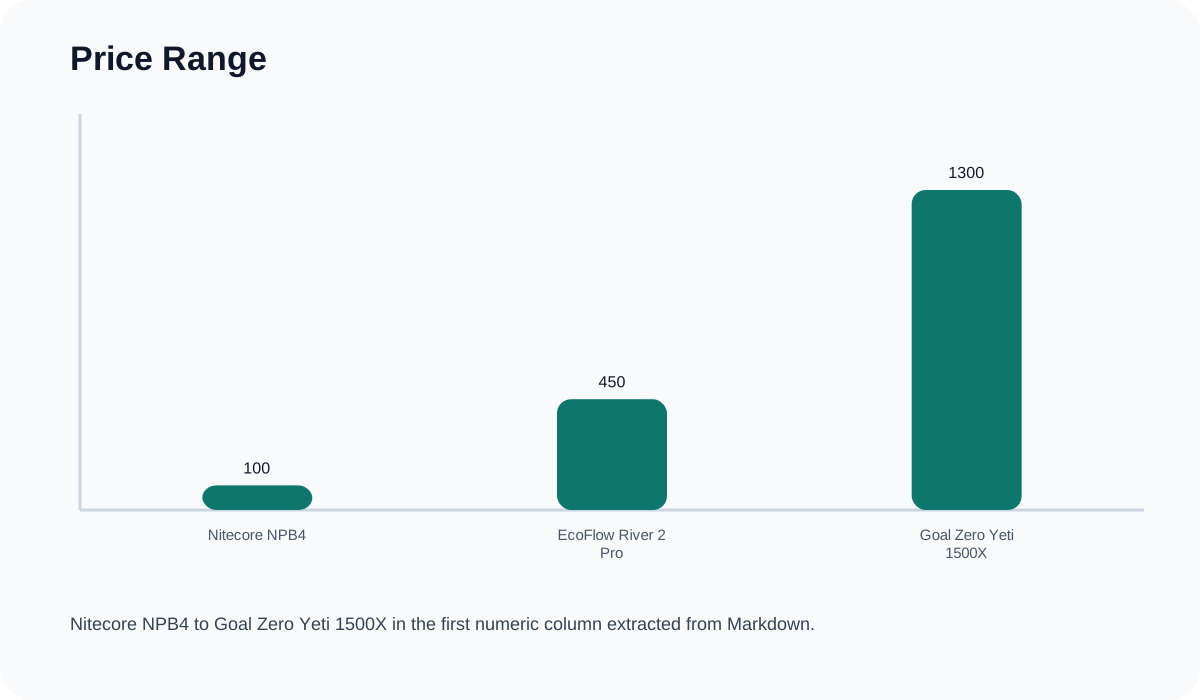
| Product | Category | Price Range | IP Rating | Capacity | Best For |
|---|---|---|---|---|---|
| Nitecore NPB4 | Personal/Handheld | 120 | IP68 (Waterproof) | 20,000mAh | Radios & Smartphones |
| EcoFlow River 2 Pro | Team/Mobile | 600 | None (Needs Case) | 768Wh | Laptop & Small Tools |
| Goal Zero Yeti 1500X | Basecamp/Heavy | 1,800 | None (Highly Durable) | 1516Wh | Chainsaw Batteries & Large Teams |
Recharge Efficiency Under Field Conditions
Solar recovery is the standard for multi-day deployments, but efficiency drops significantly under typical Pacific Northwest (PNW) or forested trail canopies. Crews often need oversized panels (estimated at 200W+) to reliably charge a 500Wh unit.
Performance Analysis & Field Pain Points
Durability and Ingress Protection
Most high-capacity portable power stations, including models from Goal Zero, Jackery, and EcoFlow, lack official IP ratings for water and dust resistance. Fine trail dust clogging cooling fans is a major equipment hazard. To mitigate this, professional crews frequently deploy specialized Pelican-style cases or opt for “ruggedized” series units. Conversely, personal carry units have largely solved this issue; the Nitecore NPB4 features a full IP68 waterproof rating. Furthermore, connector fragility (broken USB-C and barrel ports) under rough use requires teams to carry backup cabling.
Weight-to-Power and Cold Weather Logistics
Replacing gas generators with green tech introduces significant weight-to-power challenges. Teams are often tasked with carrying 40lb+ batteries over 5+ miles of elevation gain. In addition to the weight, crews operating in cold environments must account for “vampire drain”—a steady, temperature-induced loss of battery capacity overnight.
Battery Chemistry and Field Safety
LiFePO4 chemistry is rapidly becoming the mandated safety standard for work teams due to its exceptional thermal stability and lifecycle longevity (3,000+ cycles vs. standard Li-ion). Key safety protocols for deploying these stations include:
- Thermal Runaway Prevention: Never charge units in direct sunlight or keep them sealed inside unventilated, ruggedized cases while operating.
- Load Grounding: Ensure proper grounding for sensitive electronic tools when utilizing large power station inverters.
- Pack Loading: Strictly manage weight distribution to prevent back injuries when packing heavy basecamp units (like the 1516Wh Yeti 1500X) into wilderness areas.
Final Verdict
- For Individual Operatives: The Nitecore NPB4 is the essential standard for maintaining radio and GPS up-time in wet conditions due to its guaranteed IP68 rating.
- For Mobile Teams: The EcoFlow River 2 Pro strikes an ideal balance of price (600) and capacity (768Wh), though a third-party rugged case is strongly recommended for dust protection.
- For Heavy Basecamps: The Goal Zero Yeti 1500X delivers the massive 1516Wh capacity necessary to keep large team equipment and electric chainsaw batteries operational, though it requires strict weight-distribution management during the physical pack-in.
Pre-Deployment Checklist for Trail Crews
- Assess Solar Capabilities: Pack oversized solar panels (e.g., Zamp Solar Panels, 200W+) if deploying under a heavy forest canopy to combat the 18-hour estimated recharge times.
- Weatherproof the Basecamp: Ensure all non-IP-rated power stations are secured in ventilated, ruggedized enclosures to prevent fine dust ingress and moisture damage.
- Prepare for Cold: Keep personal power banks insulated or close to the body, and insulate basecamp stations to minimize vampire drain in cold weather.
- Inspect Connectors: Check all USB-C and barrel ports for structural integrity before leaving grid access.