Best Arc Lighters with Replaceable Battery Housings
Compare the top modular and 18650-powered arc lighters for 2026. Discover how replaceable batteries extend lifespan from 3 to 10+ years.
Executive Summary
For survivalists and heavy users in mid-2026, the best arc lighters bridge the gap between disposable consumer electronics and long-term off-grid utility. The market is currently split between dedicated 18650 tactical plasma lighters (offering true field-swappable batteries) and modular housing systems like the Thyrm PyroVault 2.0 (which protect standardized arc inserts). Transitioning to a lighter with a replaceable battery or a modular housing extends device lifespan from an average of 3 years to over a decade, transforming a disposable gadget into a sustainable survival tool.
Market Comparison: Modular vs. Sealed Lighters
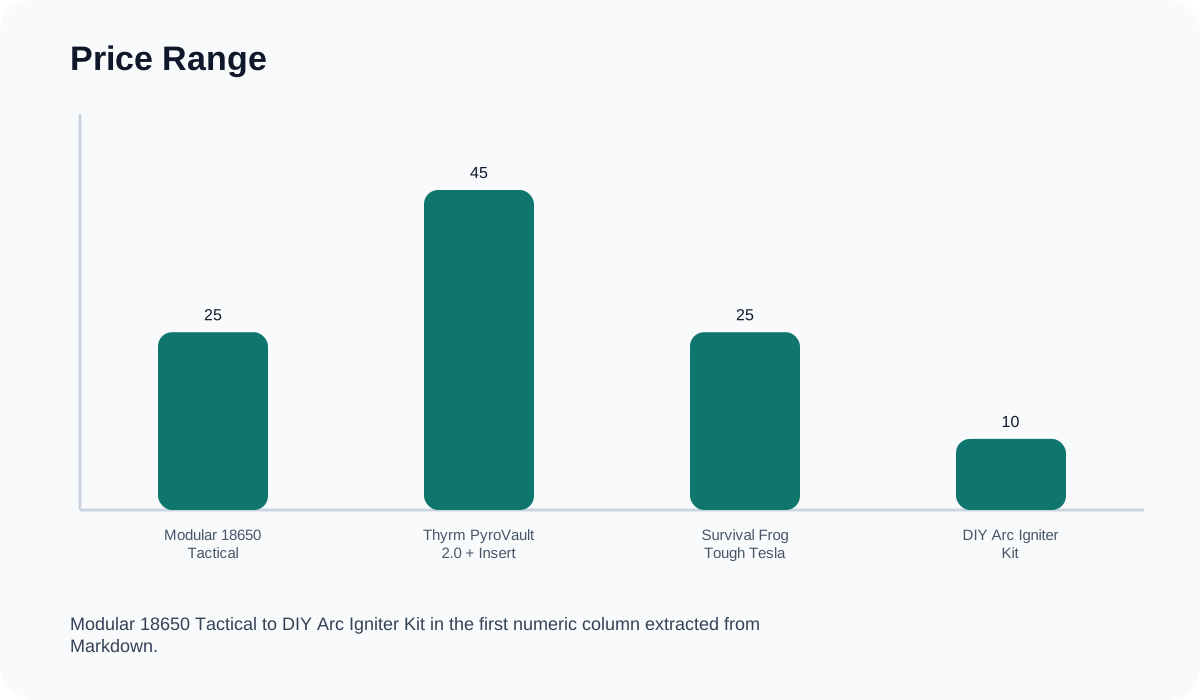
| Model | Battery Type | Waterproof Rating | Price Range | Best For |
|---|---|---|---|---|
| Modular 18650 Tactical | 18650 Li-ion (User Replaceable) | IP56 | 45 | Long-term Survival |
| Thyrm PyroVault 2.0 + Insert | Internal 200mAh (Modular Housing) | IPX7 | 60 | EDC / Tactical Gear |
| Survival Frog Tough Tesla | Sealed Li-Po | IP56 | 35 | Recreational Camping |
| DIY Arc Igniter Kit | 18650 / 3.7V external | None (Unless Custom) | 15 | Hobbyists / Projects |
Performance and Capacity Analysis
Battery capacity directly dictates field reliability. A standard sealed unit offers highly limited ignitions compared to a field-serviceable 18650 lithium-ion cell, which provides drastically higher output.
Key Modularity Trends for 2026
1. The Sustainability Gap
Mainstream arc lighters rely on sealed lithium-polymer batteries. Once the battery degrades—typically after 3 years of regular use—the entire lighter becomes electronic waste. Tactical models utilizing standard 18650 or 14500 lithium-ion cells allow users to swap the battery on the fly, effectively pushing the tool’s lifespan beyond a decade without replacing the core housing.
2. Upgraded Waterproofing Standards
Top-tier modular housings have standardized around IP56 and IPX7 ratings. Housings like the Thyrm PyroVault 2.0 utilize heavy-duty O-ring seals. This is critical for protecting the high-voltage internal circuitry and battery contacts from dust and moisture intrusion, which is essential when the lighter is subjected to extreme environments like freezing temperatures.
3. Electrode Wear Superseding Battery Failure
Even with infinite battery replacements, hardware limitations remain. Field data indicates that real-world failure points have shifted from battery degradation to electrode oxidation. The ceramic electrodes in plasma lighters eventually oxidize under high heat. To combat this, premium 2026 modular lighters feature “cleaning-ready” recessed tips, making it easier for users to safely scrape away carbon and oxidation buildup.
4. The “Future-Proof” Compromise
The Thyrm PyroVault 2.0 combined with a Zippo Rechargeable Arc Insert is currently one of the most popular modular setups. However, it requires a compromise: while the housing is heavily armored, the standardized Zippo insert itself still demands manual disassembly to replace the internal battery cell. For absolute field-serviceability, generic tactical lighters built specifically around a removable 18650 cell are mechanically superior, though they sacrifice the classic Zippo form factor.
Final Verdict
If maximum physical durability and weather resistance (IPX7) are your top priorities, building a modular lighter with the Thyrm PyroVault 2.0 and a standardized arc insert is the best approach for Everyday Carry (EDC). Conversely, if your primary concern is off-grid sustainability, simple repairs, and raw battery capacity (yielding up to 1,800 ignitions), opt for a dedicated 18650 Tactical Plasma Lighter.
Pre-Purchase Checklist
Before investing in a modular or replaceable battery arc lighter, verify the following:
- Cell Compatibility: Does the unit accept standard flat-top or button-top 18650/14500 batteries?
- Electrode Access: Are the ceramic tips recessed safely yet still accessible for routine cleaning?
- Seal Quality: Does the housing feature an intact O-ring capable of meeting an IP56 or IPX7 standard?
- Cold Weather Viability: Can the included lithium-ion cells handle extreme freezing conditions without rapid voltage drops?