Best Arc Lighters That Charge Fast Over USB-C
Discover the best USB-C fast-charging arc lighters. Compare top models by charge time, IP56 waterproofing, battery life, and real user pain points.
Executive Summary
The transition to USB-C connectivity in the arc lighter market has cut charging times by roughly 50%, bringing average charge durations down to 60–90 minutes. Modern plasma lighters from leading brands like Dissim, LCfun, and REIDEA now offer universal compatibility with power banks while delivering between 200 and 350 ignitions per charge. While weather resistance has improved—benchmarked by the IP56 standard for outdoor survivalists—buyers must still navigate technological limitations such as narrow arc gaps and reduced battery efficiency in sub-zero temperatures.
Top USB-C Arc Lighters: At a Glance
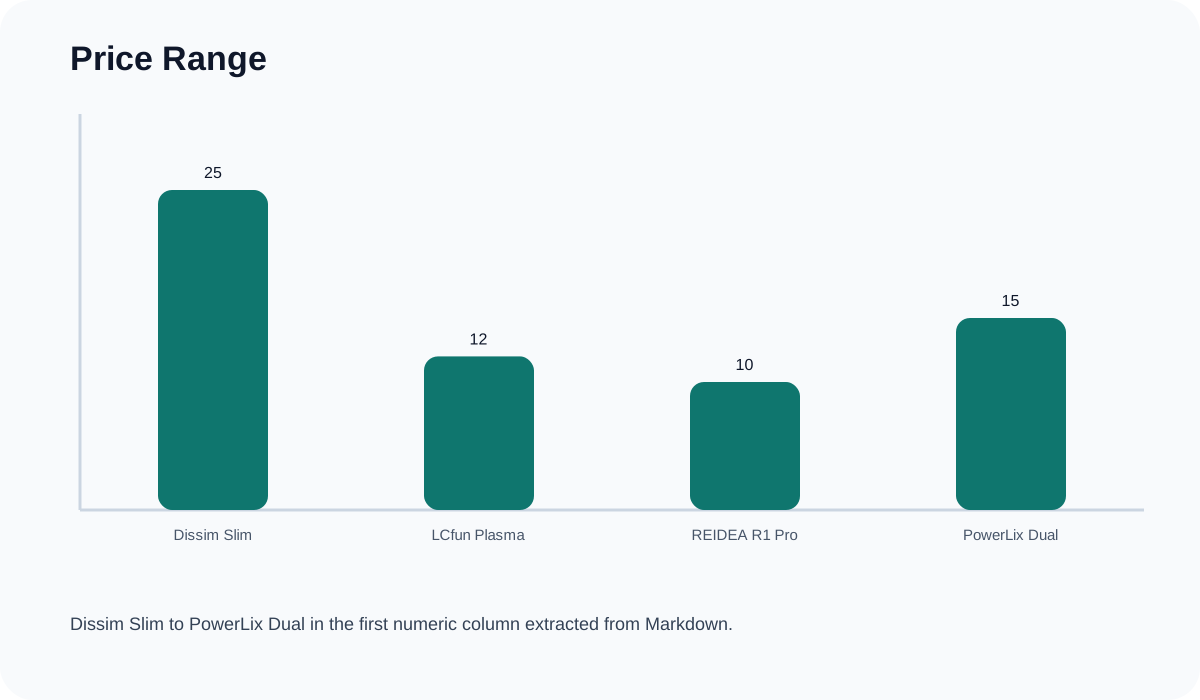
| Product | Price Range | USB-C | Waterproof | Best For |
|---|---|---|---|---|
| Dissim Slim | 35 | Yes | No | EDC / Pocket Use |
| LCfun Plasma | 18 | Yes | IP56 | Camping / Survival |
| REIDEA R1 Pro | 16 | Yes | No | Household / Kitchen |
| PowerLix Dual | 22 | Yes | IP56 | Outdoor / Heavy Duty |
Performance Data: Charging vs. Lifespan
The following chart illustrates the charging time versus the estimated number of ignitions you can expect on a single full battery.
In-Depth Analysis: What the Research Says
1. Charging Efficiency and Battery Runtime
USB-C integration has reduced average charging times from 3 hours (on older Micro-USB models) to approximately 1 to 1.5 hours. Real-world battery runtime typically spans 200 to 300 ignitions. However, users should note that battery performance drops significantly in sub-zero temperatures, which is a critical consideration for winter camping and survival scenarios.
2. Durability and Weather Resistance
The “Outdoor/Survival” segment remains the most competitive category. The IP56 rating serves as the current benchmark for waterproof and windproof claims. Models like the LCfun Plasma and PowerLix Dual feature these rugged designs, protecting the internal electronics and USB-C port from high-pressure water jets and heavy debris.
3. User Pain Points and Maintenance
Real-world field testing and user logs reveal three primary barriers to adoption:
- Narrow Arc Gap: Lighting thicker objects (like cigars or thick candle wicks) can be difficult due to the limited physical space between electrodes.
- High-Frequency Noise: Most arc lighters emit a high-pitched acoustic whine during operation that some users find unpleasant.
- Electrode Carbon Buildup: Regular maintenance is required. Without cleaning the electrodes of carbon and soot, the lighter can stop working entirely.
4. Safety Considerations
To prevent accidental misfires and overheating, reliable brands have standardized essential safety features. A 7 to 10-second auto-off timer and dual-locking mechanisms are now industry standard across all trustworthy USB-C models.
Buying Checklist & FAQ
- Does it use standard 5V/1A or Power Delivery (PD)? While USB-C equipped, most models draw standard 5V/1A power. Be mindful of plugging them into high-wattage laptop chargers if the manufacturer has not explicitly rated them for PD fast-charging protocols.
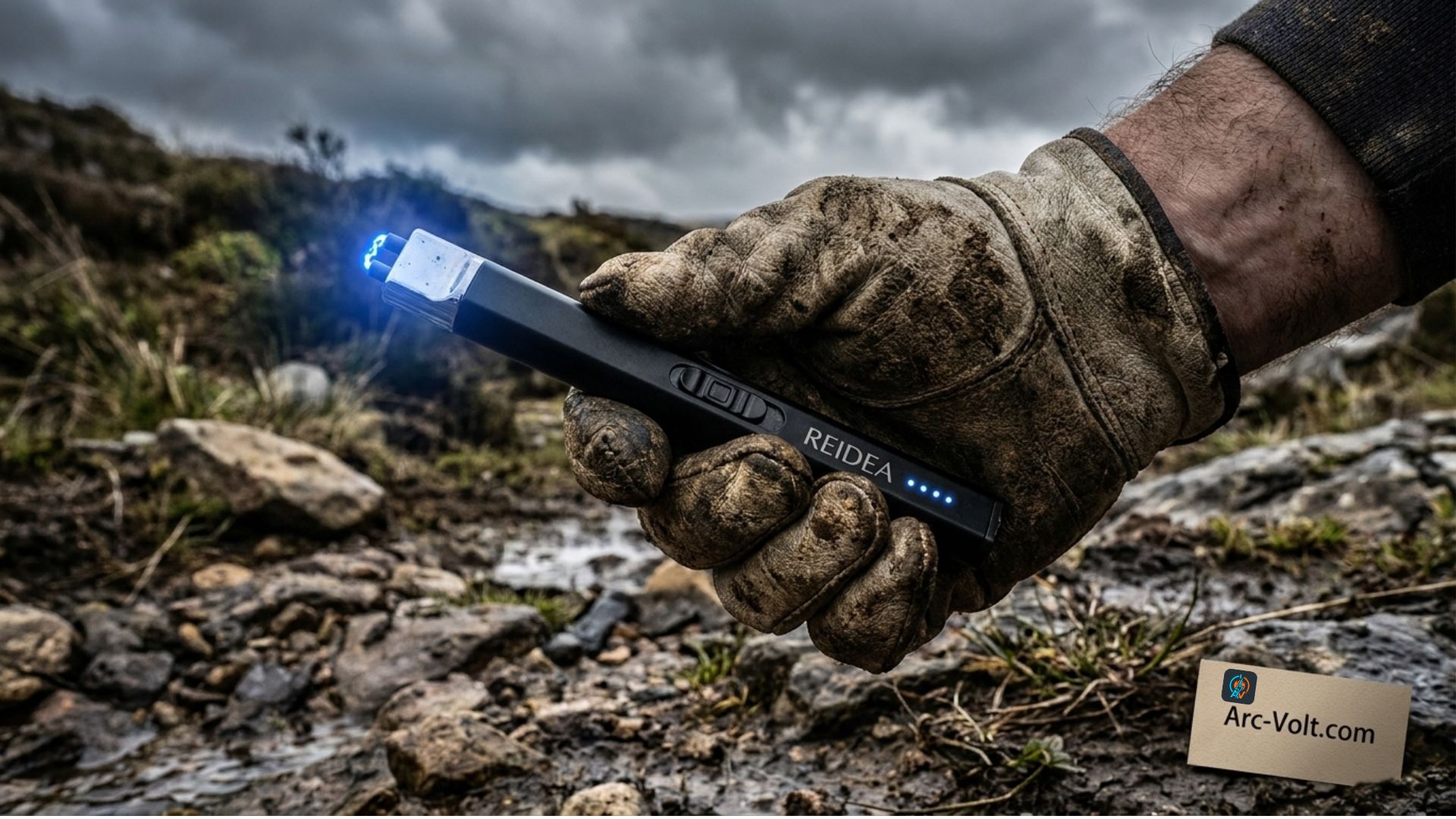
- Do I need an IP56 waterproof model? Only if your primary use is outdoors. For kitchen and candle use, standard models like the REIDEA are more than sufficient and often feature a flexible neck for hard-to-reach wicks.
- How do I maintain my arc lighter? Invest in or utilize small brushes (often included in cleaning kits) to gently clean the electrodes. This prevents the common “stops working” issue linked to carbon buildup.
Final Verdict
For rugged, outdoor use, the LCfun Waterproof Plasma Lighter offers the best balance of IP56 weatherproofing and a budget-friendly price tag (18). For household utility, the REIDEA Candle Lighter is the fastest to charge and most practical for daily indoor tasks. The Dissim Slim caters strictly to the Everyday Carry (EDC) market for those willing to spend a premium ($25+) on pocketable aesthetics.